Introduction
Chennai’s past lives in temple streets, busy markets, churches, forts, and museum halls. Each place reveals a different part of the city’s story.
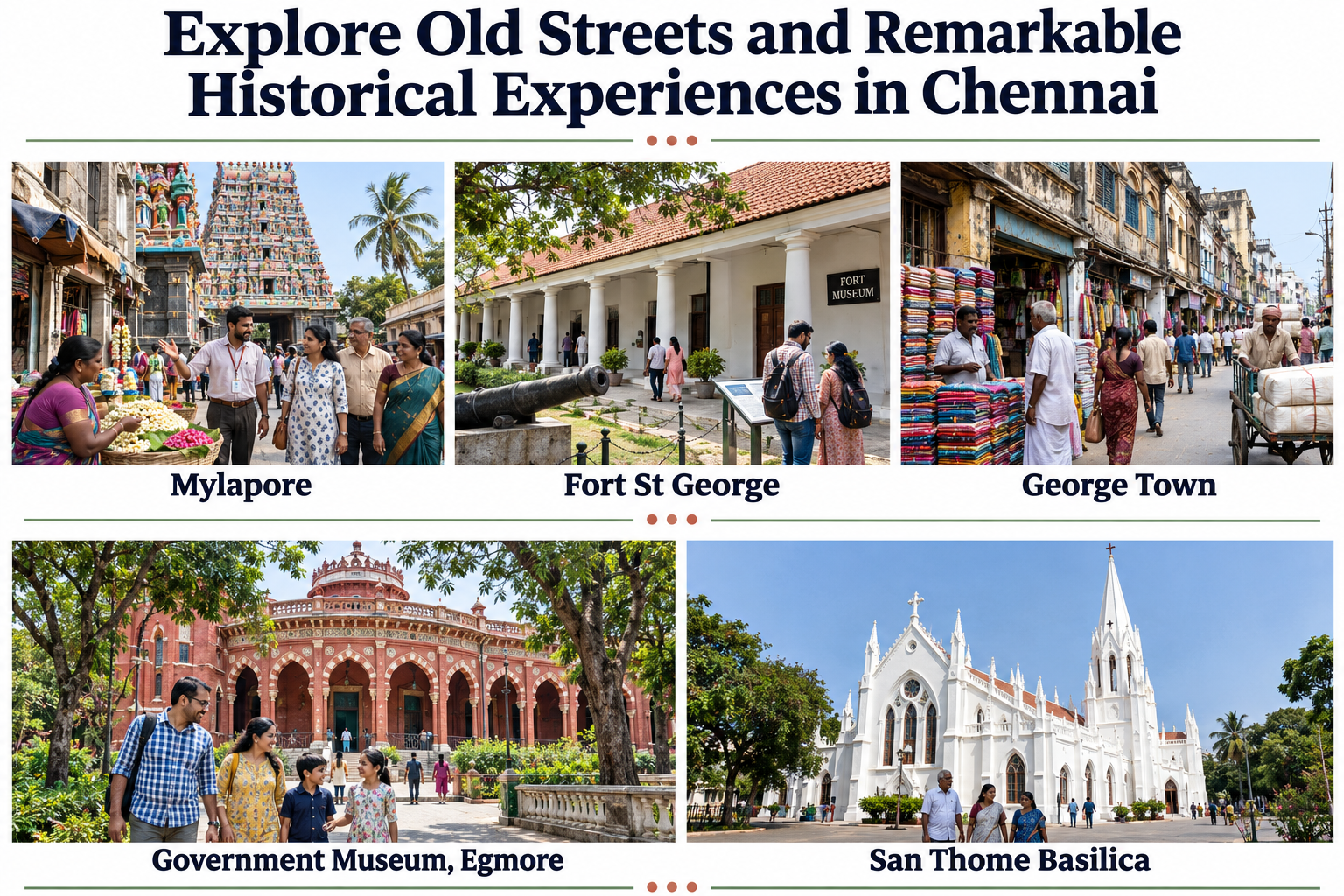
The best historical experiences in Chennai include Mylapore, Fort St George, George Town, the Government Museum, and San Thome Basilica. Together, they connect faith, trade, art, and daily life.
However, Chennai’s history reaches beyond British rule. Older settlements and local communities also shaped the city.
Start with one area and explore it slowly. Then, add another stop if your time and energy allow.
Chennai Orbit can help you discover events alongside your heritage plans. Check each site’s access rules separately before travelling.
1. Explore Fort St George and the Fort Museum
Fort St George helps explain the growth of British power in Madras. The Fort Museum offers objects linked with that period.
First, confirm entry requirements, opening hours, and any security checks. Do not assume that every building within the wider complex welcomes visitors.
Inside the museum, look for letters, portraits, coins, medals, and uniforms. Choose a few objects and read their labels closely.
Next, ask how trade and military power shaped the settlement. Also, consider the Indian workers and merchants behind its growth.
St Mary’s Church offers another point of interest within the fort area. Check visitor access separately and respect worship activities.
2. Walk Through Mylapore’s Temple Streets
Mylapore offers a different view of Chennai’s past. Begin around Kapaleeswarar Temple and the surrounding streets.
Look at the tall entrance tower, carved figures, and shops serving worshippers. These details connect the temple with daily neighbourhood life.
First, check visiting hours, dress rules, and access to inner areas. Some spaces may follow different rules from the outer streets.
Next, choose a short walking route. Ask a guide about local stories, festivals, and the purpose of nearby spaces.
Also, keep doorways clear and avoid blocking people carrying offerings. Ask before photographing worshippers or shopkeepers.
Finally, separate religious legends from claims about the age of buildings.
3. Follow Trade Stories Through George Town
George Town helps explain how commerce shaped Chennai. Its streets connect markets, places of worship, and the city’s trading past.
Start with a guided route that has a clear meeting point. Busy streets can make an unplanned walk tiring.
Next, look at shopfronts, older building details, and the use of space. Ask how merchants, craftspeople, and workers helped the area grow.
Also, notice that history continues within daily business. A heritage walk should respect loading work, customers, and residents.
Choose a route that matches your walking comfort. Confirm whether the tour includes interiors or only street views.
Then, allow extra time for traffic and crossings.
4. Study South Indian Art at the Government Museum
The Government Museum in Egmore offers a broader view of South Indian history. Its collections include bronze figures, sculptures, coins, and art.
First, check which galleries currently welcome visitors. The museum lists several galleries as temporarily closed for repairs.
Next, choose a focused route through open sections. Bronze figures and carved stone objects offer useful starting points.
Study one object’s shape, pose, material, and label. Then, ask what it reveals about craft, faith, or daily life.
Also, keep this museum separate from the Fort Museum in your plans. They stand in different locations and tell different stories.
Confirm hours and ticket rules before leaving.
5. Explore San Thome Basilica Respectfully
San Thome Basilica offers a chance to explore Chennai’s Christian heritage. Its white church building also provides a striking contrast with other city landmarks.
The site holds deep meaning within Christian tradition through its association with Saint Thomas. Present that connection respectfully as a faith tradition.
First, check visitor hours and service times. Then, ask which areas welcome sightseeing during your visit.
Look at the pointed arches, windows, and overall building shape. A guide can explain the design in simple terms.
Also, avoid photographing worshippers without permission. Keep your voice low inside.
You can pair San Thome with Mylapore if access, travel time, and your pace allow.
Real Experience & Personal Stories
A meaningful city visit often begins with something small. A carved figure, shop sign, or old letter can raise a useful question.
During your walk, write down one detail that caught your attention. Then, record the explanation from a guide or display.
Also, speak politely with local people when they have time. Ask permission before recording their words or sharing their photos.
When writing about the visit, separate facts from personal feelings. Explain what you saw and what someone told you.
This article does not claim a personal visit. These steps help you build an honest story from your own experience.
Case Studies & Success Stories
These sample plans show how clear choices can improve a visit. They describe possible outings, rather than real customer results.
A family with one free morning chooses a short Mylapore walk. They focus on shapes, street life, and one simple story.
An art lover chooses the Government Museum’s open galleries. They spend longer studying a few bronze figures.
A visitor interested in trade chooses George Town and a separate Fort Museum visit. They connect street life with objects and records.
Each plan has a clear purpose. Success means learning comfortably, rather than visiting the longest list of places.
Also, leave room for breaks and unexpected delays.
Original Insights & Opinions
The most useful Chennai heritage trip connects different kinds of evidence. Buildings show space, objects reveal craft, and streets show shared life.
So, pair one walking experience with one focused indoor visit. This gives your day variety without adding too many stops.
Also, avoid telling Chennai’s whole story through colonial buildings. Mylapore and local trading communities deserve equal attention.
My recommendation is to ask one question throughout the day. For example, explore how faith shaped neighbourhood life.
Then, compare the answers across places. A temple street and a church district may reveal different ways that communities used space.
This approach makes the visit easier to remember.
Industry Statistics & Research Data
Useful research includes access details as well as historical facts. A famous collection matters less to your day if its gallery is closed.
The Government Museum currently lists archaeology, bronze, coins, and National Art galleries as open. It lists several other sections as temporarily closed.
Because repair work can change access, recheck the notice before travelling. Do not promise children a specific display without confirming it.
The museum also records bronze figures from different periods and religious traditions. This helps visitors understand variety within South Indian art.
Avoid unsupported visitor counts or “largest” claims. Clear collection details offer more value than rankings.
Step-by-Step Guides & Tutorials
Step 1: Choose your main interest.
Pick temples, trade, churches, colonial history, or museum art.
Step 2: Group nearby stops.
Consider Mylapore with San Thome. Plan Fort St George, George Town, and Egmore with realistic travel time.
Step 3: Check current access.
Confirm hours, closures, entry rules, and open galleries.
Step 4: Arrange transport.
Check the exact entrance and the final walk from your stop.
Step 5: Confirm your guide.
Agree on language, route, duration, group size, and price.
Step 6: Set the full budget.
Include travel, tickets, meals, guide fees, and parking.
Step 7: Prepare for the weather.
Carry water, sun cover, suitable shoes, and rain cover.
Step 8: Review before leaving.
Save meeting details and check for changes.
Expert Interviews & Quotes
A strong guide should explain where a story comes from. Ask whether the source is a record, object, inscription, or local tradition.
At Fort St George, ask how museum objects reveal the link between trade and rule. In George Town, ask about Indian merchants.
At Mylapore, request a clear distinction between a religious story and building history. Both matter, but they answer different questions.
No private expert interview forms part of this article. Quoting an invented guide would add no value.
Instead, use these questions during a real visit. Look for clear explanations and honest answers when the evidence leaves room for doubt.
Detailed Comparisons: Heritage Walks vs Museum Visits
A walk shows history within its surroundings. A museum helps explain objects that you may not understand through buildings alone.
| Experience | Main benefit | Main limit |
|---|---|---|
| Mylapore walk | Temple streets and living traditions | Worship schedules and weather affect visits |
| George Town walk | Trade stories and busy street life | Traffic and crossings need care |
| Fort Museum | Objects linked with colonial history | Access and opening hours need checking |
| Government Museum | South Indian art and wider history | Some galleries may remain closed |
| San Thome visit | Christian heritage and church design | Services take priority |
Choose according to your interests. Also, match the route to your group’s walking comfort.
Unique Frameworks & Methodologies
Use a simple Notice, Ask, Compare method during the visit. It keeps learning active without making the day feel like schoolwork.
Notice: Choose one feature. It might be a bronze figure, church window, market doorway, or temple carving.
Ask: Find out who made or used it. Then, learn its purpose.
Compare: Connect it with something from another stop. Notice differences in material, design, or use.
Finally, explain one connection in your own words. Children can draw a detail instead.
Repeat this method only a few times. Careful attention to three objects can teach more than rushing past many.
Real Examples & Use Cases
Use these sample outlines as starting points. Adjust them to your location, current access, and travel pace.
| Time available | Suggested focus | Main check |
|---|---|---|
| One morning | Mylapore heritage walk | Temple hours and walking route |
| Half a day | Government Museum | Open galleries and closing time |
| One heritage day | Fort Museum and a short George Town walk | Entry rules, travel, and breaks |
| A faith-and-design outing | Mylapore and San Thome | Separate visitor rules at each site |
Chennai Orbit can help you explore events that fit around your visits. However, read each listing carefully.
Confirm whether the offer includes transport, a guide, or site entry.
Frequently Asked Questions About Chennai Orbit
1. What is Chennai Orbit?
Chennai Orbit helps people discover events and book tickets for listed activities.
2. Can it help with heritage plans?
Use it to explore suitable events. Confirm monument and museum details separately.
3. Does Chennai Orbit run every event?
Check the named organiser. Do not assume the platform runs each activity.
4. Does a booking include monument entry?
Read the offer. Entry, transport, and guide fees may cost extra.
5. Which experience suits a first Chennai visit?
Choose Mylapore for living heritage or the Fort Museum for colonial history.
6. Are the Government Museum and Fort Museum the same?
No. The Government Museum stands in Egmore, while the Fort Museum is at Fort St George.
7. Can children enjoy heritage visits?
Yes. Choose short routes and focus on simple stories, shapes, and objects.
8. Can older visitors join comfortably?
Ask about steps, seating, walking distance, and toilets before choosing a route.
9. Should I book a guide?
A guide can explain details. Agree on the route, language, duration, and fee first.
10. Where should I check current entry rules?
Contact the site office, museum, place of worship, or confirmed tour organiser.
Final Thought
Give Chennai’s historic places time to tell their stories. A temple street, museum object, or trading lane can reveal a much wider world.
Choose a manageable route and a theme that interests you. Then, look closely and ask questions about the people behind each place.
Use Chennai Orbit to explore events that may complement the trip. Confirm access before making firm plans.
A thoughtful visit leaves you with more than photos. It gives you a clearer understanding of the city and its communities.
