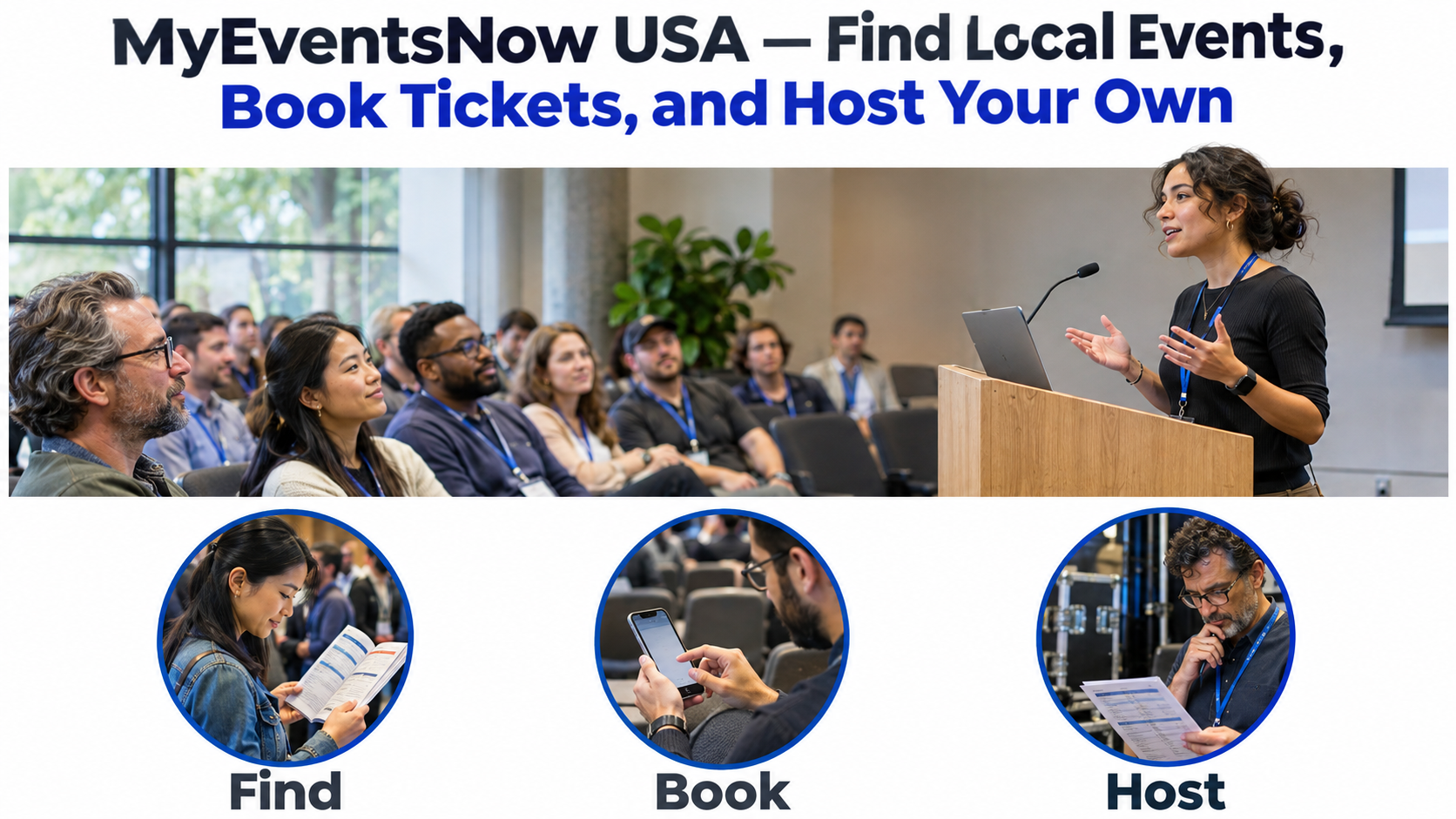
People look for events for many different reasons. Some want to enjoy live music. Others want to learn new skills, meet professionals, or explore local culture.
A visitor may search for a weekend activity. A student may look for a career workshop. A business owner may want to attend an industry conference.
Although their goals differ, they share one need. They want clear information about events that match their interests.
Event organizers also face important challenges. They need to reach the right audience, explain their programs, handle registrations, and keep attendees informed.
Digital event platforms help connect these two groups. They bring event discovery, ticket information, registration, and organizer activities into a more accessible online experience.
This guide explores the different ways people use event platforms across the United States. It also explains how organizers can publish events, manage bookings, and create a smoother experience for attendees.
1. Why People Use Online Event Platforms
People once depended heavily on posters, newspapers, local announcements, and personal recommendations to discover events.
These methods still have value. However, online searches give people another way to explore activities before making plans.
A digital platform can bring different event listings together. Visitors can review descriptions, locations, schedules, and available booking information.
Different people have different event needs
Consider these examples:
- A student wants to attend a technology workshop.
- A family wants to visit a local cultural festival.
- A music fan wants to see a live performance.
- A business owner wants to join a networking event.
- A tourist wants to explore activities in an unfamiliar city.
Each visitor needs different information.
A useful event listing should explain what the event offers, who should attend, and how visitors can register.
What makes online discovery helpful?
Online discovery can help visitors:
- Explore different event categories.
- Search by location and interest.
- Compare event schedules.
- Review available ticket options.
- Understand registration requirements.
- Plan activities in advance.
The quality of the information matters. A listing should provide accurate details rather than vague promotional statements.
2. Finding and Booking Events Without Confusion
Online Event Ticket Booking USA gives people a digital way to explore events and access available booking options.
Visitors can search for activities, compare listings, and review admission details before making a decision.
However, a smooth booking experience requires careful attention.
A practical example
Imagine a visitor wants to attend a food festival in Texas.
The visitor searches for the festival name and finds several event listings. Each listing provides different information.
One listing includes the event date and venue. Another explains the activities and admission options. A third provides organizer contact details.
The visitor compares these details before choosing an event.
This simple example shows why complete event information matters.
A better way to complete a booking
First, identify the event. Search by event name, category, location, or interest.
Next, read the description. Understand the activities and the intended audience.
Then, verify the schedule. Check the date, starting time, and expected duration.
After that, review admission options. Compare ticket categories, prices, and conditions.
Finally, follow the booking process. Complete the required steps and save your confirmation.
Avoid common booking mistakes
Do not rely only on the event title or promotional image.
Check the exact venue address. Review extra charges and cancellation terms. Confirm whether the organizer requires advance registration.
These small checks can prevent avoidable problems.
3. Build Your Personal List of Upcoming Events in USA
The United States has a wide range of entertainment, educational, cultural, and professional events.
Instead of browsing everything, visitors can create a personal event list based on their interests.
Entertainment for music and culture lovers
Concerts, theatre shows, comedy performances, and music festivals offer opportunities to enjoy live entertainment.
Visitors can search for local performances or larger events in different cities.
Learning opportunities for students and professionals
Workshops, seminars, training sessions, and conferences help people explore useful subjects.
A student may search for career guidance. A professional may look for an industry discussion.
Business opportunities for entrepreneurs
Networking sessions and business conferences bring professionals together.
Attendees can discuss ideas, learn about industry developments, and build professional connections.
Community activities for local visitors
Cultural celebrations, food festivals, exhibitions, and public gatherings help people explore their communities.
These activities can also introduce visitors to local traditions and creative work.
Create an event planning routine
Choose a few event categories that interest you.
Check listings regularly and record important dates. Add venue details, registration deadlines, and booking information to your calendar.
This simple habit can help you plan activities without rushing.
4. Turn Local Searches Into Real Experiences
People do not always want to travel to another city for entertainment.
Sometimes, they simply want an interesting activity nearby.
Events Near Me searches can help visitors explore local listings. Depending on the platform, they may search using a city, ZIP code, or location filter.
Choose an event based on your situation
Working professionals: Look for evening networking sessions, industry meetings, or weekend workshops.
Students: Explore career fairs, educational sessions, and skill-development programs.
Families: Search for community celebrations, cultural events, and family activities.
Tourists: Find local exhibitions, food festivals, music programs, and public activities.
Creative communities: Explore art workshops, exhibitions, performances, and networking opportunities.
Look beyond the distance
A nearby event may still be unsuitable if its timing conflicts with your schedule.
Check the starting time and expected duration. Review parking and transport options.
Also consider accessibility and any special entry requirements.
Choose an event that fits both your interests and your practical needs.
5. New York City: A Destination for Different Event Interests
New York City attracts people with different interests and professional goals.
Its neighborhoods offer many opportunities to explore entertainment, culture, education, and business activities.
People searching for Events in New York City can begin with the type of experience they want.
For entertainment seekers
Look for live music, concerts, comedy shows, and theatre performances.
Check the artist details, venue, schedule, and ticket information before booking.
For art and culture enthusiasts
Explore exhibitions, creative programs, cultural celebrations, and community activities.
These experiences can help visitors discover different artistic styles and traditions.
For business professionals
Search for conferences, networking meetings, industry discussions, and professional workshops.
Review the event audience and schedule before registering.
For visitors exploring the city
Food festivals and neighborhood celebrations offer another way to experience New York City.
Check the exact venue and travel time. If you plan to attend several activities, make sure their schedules do not overlap.
A little preparation can help you enjoy more of the city.
6. Live Music Planning: Finding Concert Tickets USA
Live concerts bring performers and audiences together. They create shared experiences that people may remember long after the event.
People searching for Concert Tickets USA should consider several details before selecting a show.
Start with the performer
Search for the artist, band, or music genre you enjoy.
Then review the event date and location.
Understand ticket categories
Different events may offer general admission, reserved seating, or special ticket options.
Read each category carefully. Check what the ticket includes.
Compare the full cost
Review the listed ticket price and any additional charges.
Check the payment and cancellation conditions before completing a purchase.
Prepare for the venue
Look up the venue’s entry rules. Review parking, transport, and security instructions.
Keep your confirmation accessible and arrive with enough time.
Protect your booking
Use reliable booking channels. Avoid sellers who cannot explain ticket conditions or provide clear confirmation.
Always check the organizer and event details before paying.
7. What Organizers Should Look for in an Event Ticketing Platform USA
An event organizer needs more than a place to display an event title.
They need a clear way to communicate event details and manage ticket-related activities.
An Event Ticketing Platform USA may provide several tools to support these tasks.
Event publishing tools
Organizers can prepare event descriptions, schedules, categories, and venue information.
Clear listings help visitors understand what the event offers.
Ticket configuration
Some platforms allow organizers to create different admission categories.
For example, a conference may offer standard and premium admission.
Organizers should explain each option clearly.
Booking management
Booking tools can help organizers review available booking information.
They may also support registration records and attendee lists.
Promotional features
Organizers need ways to share their event details.
They may use platform features alongside email, social media, and other suitable marketing channels.
Compare services before choosing
Review platform fees, payment options, ticket features, customer support, and terms.
Test the visitor experience where possible. Check whether the booking process makes sense.
A good platform should match the organizer’s needs and budget.
8. Give Attendees a Clear Registration Experience
Registration is often the first formal interaction between an attendee and an event organizer.
A confusing form can discourage visitors. A clear form helps people understand what information they need to provide.
Event Registration Software USA can help organizers collect and organize attendee details.
What information might organizers need?
For a general workshop, an organizer may request:
- Attendee name
- Email address
- Selected registration category
- Required event preferences
- Other details necessary for participation
The organizer should collect only information needed for the event.
How registration software can help
Depending on the product, it may support:
- Online registration forms.
- Attendee information collection.
- Multiple registration categories.
- Booking records.
- Registration status tracking.
- Confirmation messages.
- Attendee lists.
- Basic reports.
Make the form easy to complete
Use simple field names. Explain any special requirements.
Show visitors what happens after they submit the form. Test the process before publishing it.
Organizers should also handle attendee information responsibly and restrict access to authorized team members.
9. From Event Idea to Online Ticket Sales
Many organizers have good event ideas but struggle to reach potential attendees.
They may organize a workshop, conference, festival, or entertainment program. However, people need a clear way to learn about it and register.
Here is a practical approach to Sell Event Tickets Online.
Stage 1: Define the purpose
Write down why the event exists.
Identify its target audience. Decide what visitors should learn, enjoy, or experience.
Stage 2: Prepare the event details
Confirm the date, time, venue, schedule, and main activities.
Make sure the information matches the actual event plan.
Stage 3: Create admission options
Decide whether you need one ticket category or several.
Explain the differences between the available options.
Stage 4: Select a suitable service
Compare online ticketing platforms.
Check transaction fees, payment methods, booking features, and refund policies.
Stage 5: Publish the event
Prepare a clear title and useful description.
Add venue details, ticket information, organizer contact details, and registration instructions.
Stage 6: Promote the listing
Share event information through relevant channels.
You can use social media, email campaigns, professional communities, and partner networks.
Stage 7: Monitor registrations
Review bookings and keep attendees informed.
Share updates if the schedule, venue, or entry instructions change.
10. Help Your Audience Find Your Event Online
A well-planned event needs a useful listing.
When organizers List Your Event Online USA, they give potential attendees another way to discover their activities.
This approach can support businesses, educational institutions, nonprofits, community groups, and independent event promoters.
Prepare a complete event profile
Include the following information:
| Listing element | What visitors need |
|---|---|
| Title | A clear event name |
| Category | The type of activity |
| Description | Purpose and expected experience |
| Date | Confirmed event date |
| Time | Start and end time, where available |
| Location | Venue or online access details |
| Tickets | Admission options and conditions |
| Organizer | Relevant organization information |
| Registration | Clear booking instructions |
Improve the quality of your listing
Use a title that explains the event.
Start with a short description of its purpose. Then explain the main activities and who should attend.
Add important schedule and location details. Avoid unnecessary promotional language.
Use relevant search phrases naturally. Make sure the listing answers visitors’ questions.
Maintain accurate information
Review the listing whenever something changes.
Update the venue, date, ticket availability, and attendee instructions when necessary.
Clear and accurate information builds trust.
11. Manage Your Event Operations With the Right Software
Event organizers handle many tasks before, during, and after an event.
They may coordinate venues, schedules, registrations, communication, and attendee preparation.
Event Management Software USA can support parts of this work through organized digital tools.
Example: A three-day business conference
Imagine an organization planning a professional conference.
The team first confirms the event dates and venue. It prepares a schedule with speakers and sessions.
Next, it creates the event listing and configures the admission options.
The registration process collects attendee details. The organizer reviews booking records and shares important updates.
Before the conference, the team checks the attendee list, venue arrangements, and session schedule.
After the conference, the organizer reviews available reports and gathers feedback.
Choose tools that match your requirements
A small event may need only basic registration and booking records.
A large conference may require several ticket categories and more advanced reporting.
Compare the software’s features with your actual workflow.
Consider ease of use, costs, available support, and data handling practices.
Do not choose a system simply because it offers many features. Choose one that helps your team complete important tasks.
How MyEventsNow USA Supports the Event Community
Event discovery and event organization need to work together.
Visitors want to find experiences that match their interests. Organizers want to share accurate event information and manage registrations.
MyEventsNow USA brings event discovery, event publishing, ticket booking options, and organizer workflows together in one marketplace.
Visitors can explore different categories and locations. Organizers can review the available tools for publishing events and managing booking information.
The platform aims to connect organizers, businesses, entertainment providers, and attendees across the United States.
Explore the available platform features at MyEventsNow USA.
Review current service details and applicable terms before using the platform.
Frequently Asked Questions
1. Why should I use an online event platform?
An online event platform can help you explore different activities and review important event information. You can compare dates, venues, categories, and booking options before choosing an experience that matches your interests.
2. How can I discover upcoming events in the USA?
Choose an event category and location. Search for relevant listings and compare their dates, descriptions, and registration details. You can explore concerts, conferences, workshops, festivals, exhibitions, and community activities.
3. What is the easiest way to find local events?
Start with your city or ZIP code when the platform supports location searches. Select your preferred category and review nearby listings. Check the venue, schedule, and registration requirements before making plans.
4. What makes New York City suitable for event discovery?
New York City offers a variety of entertainment, cultural, educational, and professional activities. Visitors can search for music performances, theatre, exhibitions, conferences, food festivals, and neighborhood celebrations.
5. How can I choose the right concert tickets in the USA?
Check the artist, venue, date, ticket category, total cost, and entry conditions. Read the booking terms before paying. Save your confirmation and follow the venue’s official instructions.
6. What should an organizer check before selecting a ticketing platform?
Compare platform costs, payment options, ticket categories, registration tools, support, and service terms. Test the attendee journey where possible. Choose a platform that supports your event requirements.
7. How does registration software support event organizers?
Registration software can collect attendee details and organize booking records. Depending on its features, it may also support registration categories, confirmation messages, attendee lists, and basic reports.
8. Can independent organizers sell event tickets online?
Yes. Independent organizers can use suitable ticketing services to publish events and provide online admission options. They should compare fees, payment support, platform features, and booking conditions before selecting a service.
9. What makes an event listing attractive to visitors?
A useful listing has a clear title, complete description, accurate date, venue information, and simple registration instructions. Visitors should quickly understand what the event offers and whether it suits their interests.
10. What should I consider when choosing event management software?
Review the tasks your team needs to manage. Compare event publishing, ticket configuration, registration, communication, booking records, reporting, pricing, and support. Choose software that fits your event size and workflow.
Final Thoughts
Every event begins with an idea. Someone wants to bring people together, share knowledge, provide entertainment, or celebrate a community.
Digital platforms help turn those ideas into discoverable opportunities. They give attendees more ways to explore events and help organizers manage important activities.
The best experience comes from clear information and careful planning. Attendees should review event details before booking. Organizers should maintain accurate listings and choose suitable management tools.
Whether you want to attend a concert, join a conference, or publish your own event, start with a clear plan.
Explore MyEventsNow USA: https://myeventsnow.us/
