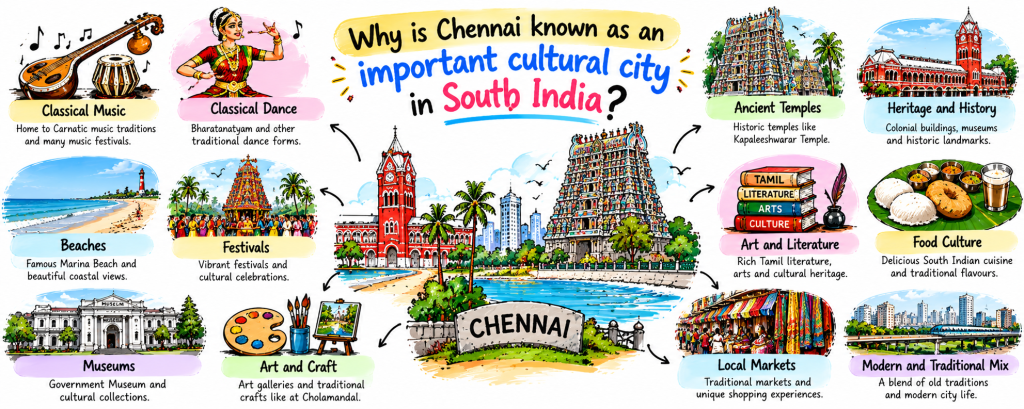
Chennai is the capital of Tamil Nadu.
It is also an important cultural city in South India.
The city brings together music, dance, temples, food, art, and history.
It also has old markets, museums, beaches, and historic buildings.
Tamil traditions remain part of daily life in Chennai.
At the same time, the city has grown into a modern metro.
This mix gives Chennai its special character.
Tamil Nadu Tourism describes Chennai as a political and cultural hub of Tamil Nadu. The city also has a strong mix of temples, heritage sites, music, dance, museums, and food.
Chennai Has Deep Tamil Cultural Roots
Tamil culture has a long history.
Language plays a major role in this culture.
Tamil is the official language of Tamil Nadu.
It also has a long literary tradition.
Chennai helps keep many parts of this culture visible.
You can see this in music, dance, food, temples, festivals, and art.
The city also has many places where visitors can learn about Tamil history.
This makes Chennai useful for people who want to understand South Indian culture.
You do not need to visit only one attraction.
A city walk can show many parts of its cultural life.
Classical Music Has a Strong Place in Chennai
Music is one of Chennai’s major cultural features.
The city has a strong connection with Carnatic music.
Carnatic music is a classical music tradition from South India.
It uses detailed melodies and rhythms.
Chennai hosts music performances at different times of the year.
The city is also known for its music and dance events.
Tamil Nadu Tourism lists Chennai music and dance festivals among its cultural attractions.
For visitors, a live performance can be a better cultural experience than only reading about the tradition.
You can hear the music directly.
You can also see how artists use rhythm, voice, and instruments.
Bharatanatyam Adds to Chennai’s Cultural Identity
Dance is another important part of Chennai’s culture.
Bharatanatyam has a strong connection with Tamil Nadu.
The dance uses hand gestures, facial expressions, body movements, and rhythm.
It can tell stories through movement.
Visitors can watch classical dance performances in Chennai.
Kalakshetra is one well-known place connected with classical dance and arts.
Tamil Nadu Tourism highlights Kalakshetra as a place where visitors can experience classical dance performances.
A live performance can help visitors understand the art better.
It shows the skill, practice, and tradition behind the dance.
Temples Show Chennai’s Cultural History
Chennai has many temples with strong cultural value.
Kapaleeshwarar Temple is one of the best-known examples.
Its Dravidian-style architecture shows detailed design and craftsmanship.
Parthasarathy Temple is another historic temple in the city.
These places are not only religious sites.
They also reflect architecture, art, rituals, and local traditions.
Tamil Nadu Tourism highlights both temples as important parts of Chennai’s spiritual and cultural heritage.
Visitors should follow the rules at each temple.
Some places may have dress rules.
Some may also restrict photography.
Respecting these rules makes the visit easier for everyone.
Chennai’s Museums Help Tell Its Story
Museums are another reason Chennai has strong cultural value.
The Government Museum in Egmore is especially important.
It has collections related to archaeology, art, anthropology, natural history, and sculpture.
The Chennai district website also lists collections connected with South Indian musical instruments, jewellery, ancient objects, and sculpture.
A museum visit can help explain the city’s past.
It can also help visitors understand South Indian art.
This makes museums useful for both tourists and students.
They offer a quieter way to explore culture.
Heritage Buildings Connect the Past With the Present
Chennai has many historic buildings.
Fort St. George is one of the city’s major landmarks.
It reflects the colonial history of the city.
Other historic structures add more layers to Chennai’s story.
Valluvar Kottam is linked with the Tamil poet Thiruvalluvar.
Santhome Basilica also has an important place in the city’s heritage.
Tamil Nadu Tourism lists historic monuments, temples, churches, and colonial buildings among Chennai’s cultural attractions.
These places show that Chennai’s culture has many influences.
Its story did not develop in one period.
Different communities and historical periods shaped the city.
Mylapore Offers a Local Cultural Experience
Mylapore is one of the well-known cultural areas of Chennai.
It has old temples, markets, streets, and traditional activity.
The area is closely linked with Kapaleeshwarar Temple.
Visitors can also explore local shops and food places.
A walk through Mylapore can feel different from visiting a single monument.
You can see daily life while exploring older parts of the city.
Tamil Nadu Tourism also promotes heritage walks through Mylapore.
This makes it useful for visitors who want a more local experience.
Food Is an Important Part of Chennai Culture
Chennai’s cultural identity also appears through food.
South Indian food is a major part of everyday life in the city.
Visitors can try dishes such as idli, dosa, vada, sambar, and traditional rice meals.
Filter coffee is also closely linked with the region’s food culture.
Food can tell visitors a lot about local habits.
For example, meals served on banana leaves are part of traditional dining in South India.
Visitors can explore local restaurants, markets, and food streets.
A food tour can therefore become a cultural tour too.
Festivals Bring the City to Life
Festivals are an important part of Tamil culture.
Chennai celebrates many traditional and religious festivals.
Pongal is one of the major Tamil festivals.
Tamil New Year is another important cultural occasion.
Other religious festivals also bring communities together.
Tamil Nadu Tourism describes festivals as an important way to experience the state’s cultural life and artistic traditions.
Festival experiences can include music, food, decorations, rituals, and public gatherings.
Visitors should learn the local customs before joining such events.
Respect is important, especially around religious activities.
Art Has a Strong Place in Chennai
Chennai also has an active art scene.
Visitors can explore galleries, cultural centres, and art spaces.
Cholamandal Artists’ Village is one notable example.
It gives visitors a chance to explore modern Indian art and the work of artists.
Tamil Nadu Tourism includes Cholamandal Artists’ Village among Chennai’s arts and museum attractions.
This shows another side of the city.
Chennai’s culture is not limited to old temples.
It also includes modern art and creative work.
That balance makes the city’s cultural scene more varied.
Traditional Crafts and Shopping Add More Depth
Shopping can also become part of a cultural trip.
Visitors can explore local markets and traditional shops.
T. Nagar is a major shopping area in Chennai.
Visitors can find clothing, jewellery, silk sarees, and other products.
Tamil Nadu Tourism highlights shopping in T. Nagar as part of the Chennai city experience.
Shopping becomes more meaningful when visitors learn about the products.
For example, they can ask about the type of fabric or craft.
This turns a simple purchase into a learning experience.
DakshinaChitra Shows South Indian Traditions
DakshinaChitra Heritage Museum offers another cultural experience.
It is an outdoor museum near Chennai.
It presents traditional houses, crafts, and lifestyles from South India.
Tamil Nadu Tourism describes it as a living museum with traditional homes and workshops.
Visitors can see how traditional spaces looked.
They can also learn about older ways of living.
This makes the museum useful for people who want to understand South Indian culture beyond monuments.
Chennai Also Has a Strong Coastal Culture
Chennai’s location beside the sea also shapes its identity.
Marina Beach is one of the city’s best-known landmarks.
It is a common place for walks, local food, and evening visits.
The beach also shows how public spaces become part of city life.
Visitors can see families, walkers, vendors, and local residents sharing the same space.
This gives the beach a cultural role beyond tourism.
Tamil Nadu Tourism lists Marina Beach as one of Chennai’s major attractions.
Chennai Combines Old and New
One of Chennai’s strongest features is its mix of old and new.
You can visit an old temple in the morning.
Later, you can visit a modern shopping area.
You can watch classical dance in the evening.
You can also enjoy a modern restaurant or art space.
This mix is part of normal city life.
Chennai does not keep tradition separate from modern life.
Instead, both exist side by side.
That makes the city interesting for visitors with different interests.
Chennai Offers Many Ways to Explore Culture
Visitors do not need to follow one fixed route.
You can choose a temple trail.
You can take a heritage walk.
You can visit museums.
You can attend a music or dance show.
You can explore local food.
You can also visit markets and art spaces.
Tamil Nadu Tourism lists many of these experiences as part of Chennai tourism.
This gives visitors freedom when planning a cultural trip.
You can choose experiences based on your time and interests.
A Simple Cultural Day in Chennai
A cultural day does not need a complicated plan.
Start with a morning visit to Mylapore.
Explore Kapaleeshwarar Temple and nearby streets.
Then enjoy a traditional South Indian meal.
In the afternoon, visit the Government Museum.
Later, explore a cultural or art space.
You can finish the day with a music or dance performance if one is available.
This type of plan combines history, food, art, and local life.
What Should Visitors Keep in Mind?
Cultural travel needs some respect.
Follow temple rules.
Ask before photographing people.
Keep quiet during performances.
Do not touch old objects or artwork.
Dress suitably at religious places.
Also check event timings before travelling.
Cultural programs can have limited schedules.
A little planning can make the experience much better.
Why Chennai Stands Out as a Cultural City
Chennai’s cultural importance comes from many parts working together.
Tamil language and literature form one part.
Music and dance form another.
Temples and historic buildings add more depth.
Museums protect important collections.
Food keeps local traditions part of daily life.
Festivals bring communities together.
Art spaces show how culture continues to change.
The city therefore offers both heritage and modern culture.
Final Thoughts
Chennai is known as an important cultural city in South India because culture is part of its everyday life.
You can see it in temples, music, dance, food, festivals, museums, markets, and art.
You can also see it in the city’s older neighbourhoods and historic buildings.
Tamil Nadu Tourism describes Chennai as a cultural hub with a wide range of heritage and modern attractions.
For visitors, this creates many ways to learn about South Indian culture.
You can choose a temple visit.
You can watch Bharatanatyam.
You can listen to Carnatic music.
You can explore a museum.
You can enjoy local food.
You can also walk through an old neighbourhood.
That mix of tradition, history, art, and modern life gives Chennai its strong cultural identity.
Quick Takeaway
Chennai is an important cultural city because its traditions remain part of modern city life.
Its temples, music, dance, food, festivals, museums, art, and heritage sites all add to this identity.
A cultural visit to Chennai is therefore more than sightseeing.
It is a chance to understand the city through its people, traditions, places, and daily life.
Hashtags
#ChennaiTourism · #ChennaiCulture · #ChennaiTravel · #TamilNaduTourism · #SouthIndiaTravel · #ChennaiHeritage · #ChennaiTourismGuide
